The 2026 market for Flushing Water Pump systems is becoming more performance-driven. Buyers now compare flow stability, discharge head, noise, service life, and energy use. The WHO/UNICEF Joint Monitoring Programme reported that 3.5 billion people still lacked safely managed sanitation in 2022. That gap creates demand for dependable flushing equipment. It also exposes weak designs.
Catarina de Albuquerque, a leading sanitation policy expert, has stated, “Sanitation is a human right.” Her point matters for pump selection. A blocked toilet is not merely inconvenient in a hospital, hotel, or remote housing project. It can quickly become a public-health concern. The U.S. Department of Energy also notes that pumping systems may consume 25–50% of industrial facility electricity. Efficient motors and correctly sized impellers deserve serious attention. They are not decorative specifications.
This guide compares centrifugal, vortex, grinder, submersible, and air-assisted Flushing Water Pump types for global buyers. It considers wastewater solids, pipe distance, voltage differences, installation depth, maintenance access, and local water pressure. Real field conditions are rarely tidy. Sand enters the pit. Cables corrode. Operators sometimes choose oversized pumps. That decision can increase cycling, noise, and operating costs.
No single model wins everywhere. A compact vortex pump may suit a small commercial restroom, while a grinder pump may handle narrow pressure lines more effectively. Manufacturer claims also require verification. Buyers should request test curves, duty-point data, protection ratings, spare-parts plans, and independent certifications. This introduction is practical, but not perfect. Project-specific hydraulic calculations remain essential.
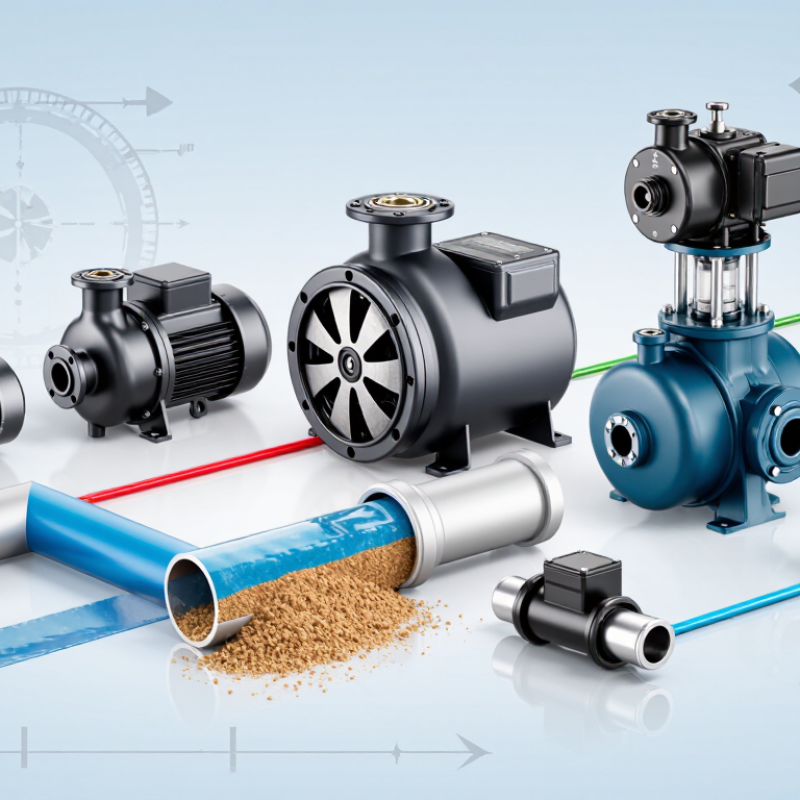
What Is a Flushing Water Pump and How Does It Work?
A flushing water pump moves clean or recycled water through toilets, pipelines, tanks, and cleaning systems. It creates enough pressure to remove waste and rinse internal surfaces. Unlike a basic transfer pump, it must deliver steady flow during short, repeated flushing cycles. The correct model depends on flow rate, pressure head, water quality, and installation height.
Inside the pump, an electric motor turns an impeller or drives a diaphragm. Water enters through the inlet, gains pressure, and leaves through the discharge pipe. A pressure switch or controller starts the motor when flushing begins. A check valve prevents backflow after the cycle ends. Small household systems often use compact centrifugal pumps. Systems handling particles may require wider passages and more robust internal parts.
In field inspections, air trapped in the suction line often causes weak flushing. It can also create loud vibration. Correct pipe sizing matters. A narrow hose may reduce performance, even with a powerful motor. Filters, seals, and valves need regular checks, especially where water contains sand or mineral deposits. The neat textbook explanation is incomplete. Real installations face uneven voltage, poor alignment, and occasional dry running. Selecting a pump with suitable protection, service access, and verified operating data improves reliability. A qualified technician should confirm electrical connections and pressure settings before commissioning.
| Pump Type | How It Works | Typical Flow Range | Typical Pressure or Head | Solids Handling | Best Flushing Applications | Main Advantages | Key Limitations |
|---|---|---|---|---|---|---|---|
| End-Suction Centrifugal | A rotating impeller converts motor energy into water velocity and pressure. The casing then directs the water into the discharge line. | Approximately 5–500 m³/h | Approximately 1–10 bar; 10–100 m water head | Low to moderate; clean water or limited suspended particles | Pipe flushing, tank cleaning, irrigation-line flushing, and general water circulation | High flow capacity, simple construction, broad availability, and comparatively easy maintenance | Performance decreases with air entrainment, excessive solids, or operation far from the rated flow |
| Multistage Centrifugal Booster | Several impellers are arranged in series, with each stage adding pressure to the water stream. | Approximately 1–100 m³/h | Approximately 2–16 bar; 20–160 m water head | Low; normally requires filtered or relatively clean water | Long pipelines, high-rise systems, membrane pre-flushing, and high-pressure equipment cleaning | Produces higher pressure than a single-stage pump while maintaining a compact footprint | More sensitive to abrasive particles, dry running, and incorrect inlet conditions |
| Submersible Drainage Pump | The motor and pump are immersed in the water. The impeller lifts water through a discharge hose or pipe. | Approximately 5–300 m³/h | Approximately 0.5–6 bar; 5–60 m water head | Moderate to high, depending on the vortex or semi-open impeller design | Flooded pits, reservoirs, construction sites, wastewater basins, and temporary flushing operations | Self-priming by immersion, portable installation, and effective removal of accumulated water | Requires suitable electrical protection; cable, seals, and motor cooling need regular inspection |
| Diaphragm Pump | A flexible diaphragm moves back and forth, creating suction and discharge through check valves. It may be powered by air, electricity, or an engine. | Approximately 0.5–30 m³/h | Approximately 2–8 bar | Moderate to high; suitable models can handle suspended particles | Intermittent flushing, sludge-containing water, chemical-compatible cleaning, and hazardous-area service | Can run dry for limited periods, offers good self-priming, and isolates the fluid from the drive mechanism | Pulsating flow, lower capacity than many centrifugal pumps, and periodic diaphragm or valve replacement |
| Progressive Cavity Screw Pump | A helical rotor turns inside an elastomeric stator, forming sealed cavities that move water or slurry continuously toward the outlet. | Approximately 0.5–100 m³/h | Approximately 2–15 bar | High for soft suspended solids and viscous mixtures; abrasive grit can accelerate wear | Slurry flushing, sediment transfer, wastewater systems, and controlled low-pulsation pumping | Steady flow, good metering capability, and effective handling of fluids with changing viscosity | Must not run dry; rotor and stator wear can increase when abrasive particles are present |
| Piston or Plunger Pump | A reciprocating piston or plunger changes the chamber volume and forces water through inlet and outlet valves. | Approximately 0.1–20 m³/h | Approximately 20–100 bar or higher, depending on design | Low; requires clean, filtered water to protect valves and seals | High-pressure flushing of small lines, precision cleaning, pressure testing, and specialized equipment washing | Very high pressure, accurate flow control, and strong performance against system resistance | Pulsating discharge, more complex maintenance, and generally unsuitable for large volumes of dirty water |
| Vortex or Non-Clog Wastewater Pump | A recessed or vortex impeller creates a flow path that reduces direct contact between solids and rotating components. | Approximately 5–250 m³/h | Approximately 0.5–8 bar; 5–80 m water head | High; selected models can pass fibrous matter and larger suspended solids | Dirty-water flushing, sewage lines, stormwater systems, and sediment-contaminated tanks | Lower clogging risk and reliable operation in wastewater environments | Usually less energy-efficient than clean-water impellers and may require larger discharge piping |
Stainless steel resists moisture and many cleaning chemicals. Grade 316 may suit coastal or aggressive environments. Cast iron is strong and affordable, but exposed areas may corrode. Engineered polymers reduce weight, yet temperature limits require checking. Material alone does not guarantee reliability. Not always.
Centrifugal pumps suit steady flow and moderate pressure. Submersible pumps work well in tanks, pits, and flooded areas. Diaphragm pumps can handle variable flow and some suspended particles. Self-priming pumps help when air may enter suction lines. Check temperature, acidity, debris, and solids size before deciding.
Measure flow at the actual discharge head, not the maximum rating. Include pipe length, bends, valves, elevation, and nozzle pressure. Pipe friction matters. A high-flow pump may perform poorly through narrow pipes. I have seen this mistake repeatedly. Measure the real load.
Thermal protection, dry-run sensing, and overload control can reduce expensive failures. Solids-handling capacity matters when fibers or sediment enter the water. Compare performance curves with site conditions. A powerful-looking pump can still fail under excessive elevation. Optimistic data deserves questioning.
Mechanical seals must match the fluid and operating temperature. Ceramic faces may suit demanding service. EPDM or FKM elastomers can provide different compatibility options. Confirm the exact fluid chemistry before ordering. A small seal failure can stop the entire system.
Mount the pump on a rigid, level base. This reduces vibration and seal stress. Keep suction pipes short, straight, and wide enough. Add an accessible isolation valve and a strainer where debris may collect. Leave space around the motor for cooling and repairs. Small oversights matter.
Check leaks, pressure, electrical connections, strainers, and abnormal noise. Record rising motor temperature or unstable flow. Clean strainers before debris restricts suction. Replace worn seals with compatible materials. Never run a non-submersible pump dry. Some teams wait for performance loss. That habit is expensive.
Confirm voltage, frequency, phase, protection ratings, and duty cycle for the installation region. Requirements differ by country. Use lockout procedures, protective grounding, dry electrical connections, and correctly rated overload protection. Guard rotating couplings and pressurized discharge lines. Qualified local professionals should verify applicable electrical, plumbing, and workplace requirements. Specification sheets are useful, but incomplete.
This guide explains what a Flushing Water Pump is, how it moves water through pipelines or equipment, and why it is essential for cleaning, rinsing, and system maintenance. It compares common pump types, including centrifugal, self-priming, diaphragm, and submersible designs, highlighting differences in flow rate, pressure, suction capability, energy use, and suitable applications. Buyers will also learn how to evaluate materials such as stainless steel, reinforced plastics, and corrosion-resistant components according to water quality and operating conditions.
For global applications, selecting the right Flushing Water Pump requires checking voltage, frequency, connection standards, temperature range, duty cycle, and local installation requirements. The guide also covers practical considerations such as pipe sizing, inlet protection, drainage, access for servicing, noise control, and safe electrical installation. Routine inspection of seals, hoses, filters, and moving parts can improve reliability, reduce downtime, and extend service life.

 Zhangqiu