Choosing the right Overflow Pump begins with understanding the system, not browsing the largest motor available. Flow rate, discharge head, fluid temperature, solids, viscosity, and operating frequency all influence the final decision. A pump that handles clean water may struggle with muddy runoff, abrasive particles, or sudden inflow surges.
Dr. Lev Nelik, a recognized pump consultant and author of Pumping Machinery, has emphasized, “The best pump is not the biggest pump; it is the one that matches the system.” That principle remains practical on a crowded plant floor. Measure the actual basin level. Check the pipe diameter. Listen for air entering the suction line. Small details matter.
An effective Overflow Pump should move liquid reliably without excessive energy use or repeated seal failures. Examine its rated flow, total dynamic head, NPSH requirements, material compatibility, and automatic control options. Float switches can respond quickly, but they may need protection in turbulent basins. Variable-frequency drives offer control, yet poor settings can create unstable operation.
The installation environment deserves equal attention. Mud, rainwater, chemicals, and temperature changes can shorten pump life. Maintenance access matters too. A technically excellent pump becomes a poor choice when technicians cannot safely reach its strainer or motor.
Do not trust catalog figures alone. Real systems are rarely perfect. A neat spreadsheet can still mislead when pipe friction, blocked screens, or fluctuating inflow are ignored. This guide explores those practical decisions, helping readers compare Overflow Pump options with clearer evidence and fewer expensive assumptions.
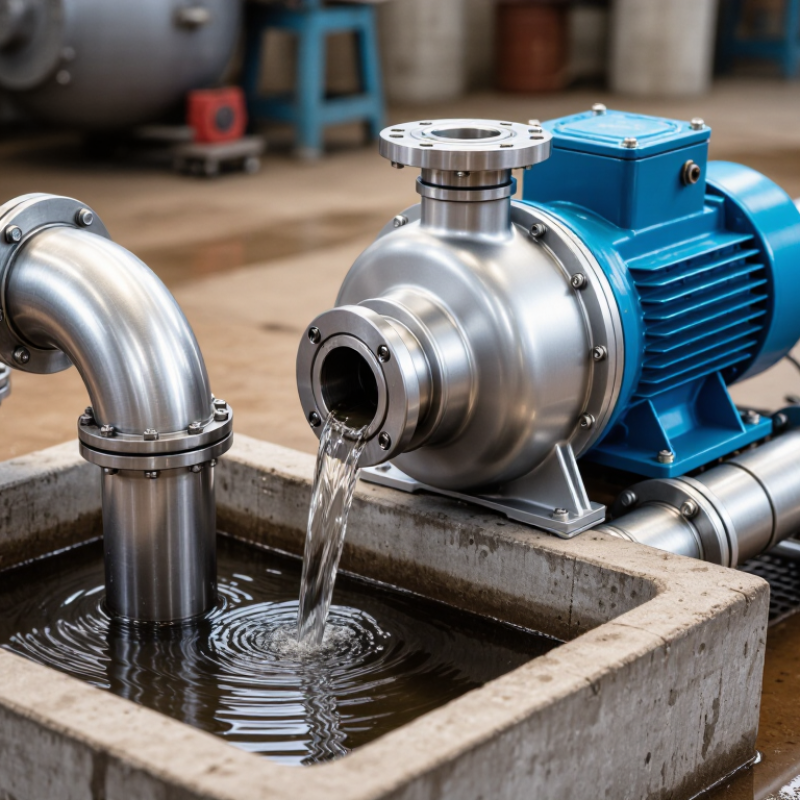
An overflow pump should move excess liquid safely, not compensate for poor tank design. Define its duty first. Record normal flow, peak inflow, liquid temperature, viscosity, solids content, suction level, and discharge elevation. Measure the overflow path during real operation. A calculation alone can miss sudden surges.
The U.S. Department of Energy’s Improving Pumping System Performance sourcebook estimates that pumping systems may consume about 25% of industrial electricity. This makes operating conditions important, not optional. Select the pump near its best efficiency point during normal overflow events. Check the Hydraulic Institute’s allowable operating region guidance before approving the duty point. Oversizing can increase recirculation, vibration, and energy use.
Keep the safety margin reasonable. Too little margin risks flooding; too much may cause unstable cycling. It is an easy mistake. Confirm the motor’s starting method, control response, standby arrangement, and alarm settings. The discharge pipe should limit backpressure under the highest expected flow. Include a strainer only when maintenance access is practical. A blocked strainer can quietly defeat the entire system.
Review at least three scenarios: normal inflow, peak inflow, and power recovery. Test the float or level sensor with clean water and realistic liquid levels. Record actual amperage and flow after commissioning. The first selection may be imperfect. That is why measured performance deserves more trust than a polished datasheet.
Choosing the right overflow pump starts with the actual flow rate, not the pipe size. Measure how much liquid must move per minute during normal and peak operation. A pump rated only for average flow may struggle when tanks fill quickly. I have seen operators underestimate this difference. My first estimate was too optimistic.
Head is equally important. Add the vertical lift, pipe friction, bends, valves, and outlet pressure. A pump producing high flow at zero head may deliver far less at the required height. Check the pump curve at your working point. Leave a modest capacity margin, but avoid excessive oversizing. Large pumps can cycle harshly, waste energy, and create unstable flow.
System conditions can change the selection. Temperature affects viscosity and seal performance. Suspended solids may require a wider passage or slower impeller speed. Confirm the suction line is short, supported, and free from air leaks. Cavitation can sound like gravel inside the casing. That warning should not be ignored. Consider automatic level controls, power availability, maintenance access, and emergency overflow volume. These details often decide whether the installation remains reliable after months of use. Recheck the figures onsite, because drawings are sometimes wrong.
Match the pump capacity to the required flow rate, total dynamic head, and operating conditions. The chart compares the design flow with a practical pump selection that includes approximately 20% flow allowance.
Flow rate is shown in cubic metres per hour (m³/h), while total dynamic head is shown in metres (m). Confirm pipe friction, elevation, fluid temperature, viscosity, solids content, and available NPSH before final pump selection. The values shown are representative engineering sizing examples for clean-water systems.
An overflow pump should match the liquid, flow rate, lift, and operating pattern. Centrifugal pumps suit clean liquids and steady discharge. Diaphragm pumps handle solids, sludge, and changing flow more comfortably. Peristaltic pumps protect sensitive fluids because the hose contains the liquid. That advantage costs more when hoses wear frequently.
Material selection is not cosmetic. Stainless steel resists many corrosive liquids, while polypropylene can perform well with selected chemicals. Elastomers require closer checking. Temperature, concentration, and cleaning chemicals can change compatibility. The Hydraulic Institute recommends evaluating the complete system curve, not only the pump’s catalog flow. A small mismatch may create heat, vibration, or repeated overflow events.
Power choice also affects reliability. Electric motors usually offer efficient, quiet operation and simple automation. Variable-speed drives can reduce throttling losses when demand changes. The U.S. Department of Energy reports that optimized pumping systems can often reduce energy use by 20% to 50%. Pneumatic pumps remain useful where electrical equipment is unsuitable, but compressed air is often inefficient. I have seen selections fail because air consumption was ignored. Check it. Compare total operating cost, not purchase price. DOE’s Improving Pumping System Performance sourcebook also identifies oversized pumps and poor controls as common energy problems. A practical review should include duty cycle, standby capacity, seal access, noise, and the cost of one hour of unexpected overflow.
How to Choose the Right Overflow Pump?
An overflow pump must fit the installation, not just the advertised flow rate. Measure the tank height, discharge distance, pipe diameter, fluid temperature, and expected solids. A pump operating far from its best efficiency point may vibrate, overheat, and waste electricity. The U.S. Department of Energy’s pumping-system guidance identifies potential energy savings of 20–50% through better sizing, controls, and maintenance. That range is useful, but real savings depend on site conditions.
Control features deserve equal attention. Adjustable speed control can match changing inflow and reduce repeated starts. High-level alarms, dry-run protection, and automatic shutdowns help prevent spills and motor damage. Keep manual override access clear. It matters during a fault. The International Energy Agency reports that electric motor systems consume about 53% of global electricity, making efficient pump control an important engineering decision. However, efficiency is not everything. A controller that operators cannot understand may create new risks.
Maintenance should be practical. Choose inspection ports, replaceable seals, visible indicators, and sensors that record useful data. Check vibration, current draw, and discharge performance during routine visits. Safety requires isolation points, guarded couplings, electrical protection, and procedures aligned with applicable standards. In my experience, specifications often look complete until installation begins. A wet, cramped pump room exposes the gaps. I would rather accept slightly lower peak capacity than ignore access, drainage, or emergency response. Industry reports provide strong guidance, yet field verification remains essential.
| Evaluation Area | Selection Dimension | What to Check | Recommended Specification or Practice | Why It Matters | Priority |
|---|---|---|---|---|---|
| Installation | Required flow rate | Determine the normal, peak, and minimum overflow volume, including possible surges. | Select a pump that covers the design flow at the actual total dynamic head; avoid sizing only from the maximum free-flow rating. | Ensures the pump can remove liquid reliably without excessive energy use or unstable operation. | Essential |
| Installation | Total dynamic head | Add static lift, discharge pressure, pipe friction, fittings, valves, and any elevation changes. | Compare the system duty point with the pump curve at the intended flow rate. | A pump may provide adequate flow at low resistance but fail when installed in a high-resistance system. | Essential |
| Installation | Suction arrangement | Check suction lift, pipe length, pipe diameter, air-entry risk, and the possibility of a flooded suction. | Use a flooded suction where practical; keep the suction line short, direct, adequately sized, and free from high points that can trap air. | Reduces loss of prime, cavitation, vibration, and inconsistent flow. | Essential |
| Installation | NPSH and cavitation margin | Compare available NPSH in the system with the pump’s required NPSH at the operating flow and temperature. | Confirm that NPSH available exceeds NPSH required with an appropriate engineering margin; recalculate for hot or volatile liquids. | Protects the impeller and bearings from noise, vibration, pitting, and premature failure. | Essential |
| Installation | Liquid and material compatibility | Review liquid temperature, viscosity, pH, solids content, corrosiveness, and chemical concentration. | Choose wetted materials, seals, gaskets, and elastomers that are compatible with the actual liquid and operating temperature. | Prevents corrosion, swelling, leakage, blockage, and rapid wear. | Essential |
| Installation | Solids and debris handling | Identify particle size, concentration, fibrous material, and the risk of blockage at the intake. | Use a suitable strainer, screen, vortex design, or solids-handling pump; ensure the screen can be cleaned safely. | Reduces clogging and protects the impeller and mechanical seal. | Essential |
| Installation | Pipework and valves | Check pipe support, expansion, isolation valves, check valves, and discharge routing. | Support pipework independently of the pump; install isolation provisions and use a check valve where reverse flow or backspin is possible. | Limits mechanical stress, reverse rotation, water hammer, and service interruptions. | Essential |
| Control | Level-based automation | Choose between float switches, pressure transmitters, ultrasonic sensors, or other level measurement methods. | Use high-level start/stop control with separate high-high alarm functionality where overflow could cause damage. | Maintains the target level and provides early warning before a spill or flooding event. | Essential |
| Control | Variable-speed control | Determine whether the process requires variable flow or only simple on/off operation. | Use a properly configured variable-frequency drive only when the motor, pump, controls, cooling, and minimum-flow requirements are compatible. | Can improve flow control and reduce energy consumption, but incorrect settings may cause overheating or unstable operation. | Recommended |
| Control | Dry-run protection | Assess whether the pump can lose liquid supply or operate below the minimum submergence level. | Provide a low-level cutoff, current monitoring, pressure monitoring, or a dedicated dry-run sensor as appropriate. | Protects seals, bearings, and pump components from overheating and accelerated wear. | Essential |
| Control | Minimum-flow protection | Review the pump curve and the minimum continuous flow required by the pump design. | Prevent prolonged operation below the manufacturer’s minimum flow; use a bypass or automatic recirculation arrangement when required. | Reduces overheating, internal recirculation, vibration, and seal damage. | Essential |
| Control | Electrical protection | Verify voltage, phase, frequency, motor current, starting method, and available short-circuit protection. | Use correctly rated overload, short-circuit, ground-fault, and phase-loss protection in accordance with applicable electrical codes. | Protects personnel, wiring, motor windings, and control equipment. | Essential |
| Maintenance | Routine inspection access | Check whether the pump, strainer, valves, sensors, and control panel can be reached without removing major equipment. | Provide isolation, drainage, lifting access, and sufficient clearance for inspection and component replacement. | Shortens service time and reduces maintenance-related safety risks. | Recommended |
| Maintenance | Seal and bearing serviceability | Identify the expected wear parts and the tools required for replacement. | Prefer designs with accessible mechanical seals, replaceable wear components, standard bearings, and documented service procedures. | Improves repairability and helps control lifecycle cost. | Recommended |
| Maintenance | Inspection frequency | Base inspection intervals on duty cycle, liquid cleanliness, temperature, vibration, and operating history. | Perform regular visual and operational checks; trend vibration, motor current, discharge pressure, flow, and leakage rather than relying on a fixed interval alone. | Condition-based monitoring can identify degradation before an unplanned shutdown. | Recommended |
| Maintenance | Spare parts and documentation | Confirm availability of seals, gaskets, bearings, impellers, sensors, fuses, and operating instructions. | Keep a parts list, pump curve, wiring diagram, start-up procedure, and maintenance record at the installation. | Reduces downtime and prevents incorrect replacement or setup. | Recommended |
| Safety | Emergency stop and isolation | Determine how operators will stop the pump during flooding, leakage, blockage, or electrical fault conditions. | Provide a clearly identified emergency stop where required, plus lockable electrical and hydraulic isolation points. | Allows rapid shutdown and supports safe inspection and repair. | Essential |
| Safety | Pressure relief and overpressure protection | Consider whether the discharge line can be blocked and whether the pump is positive-displacement or centrifugal. | Fit a correctly sized relief device for positive-displacement pumps and protect all systems from pressure exceeding the weakest component rating. | Prevents pipe rupture, equipment damage, and uncontrolled release of liquid. | Essential |
| Safety | Guarding and rotating parts | Inspect couplings, shafts, fans, belts, and other accessible moving components. | Install fixed guards and prevent access to rotating parts during operation; apply lockout/tagout before servicing. | Reduces entanglement and contact hazards. | Essential |
| Safety | Electrical enclosure and environment | Assess moisture, washdown, dust, corrosive atmosphere, outdoor exposure, and hazardous-area classification. | Select an enclosure and installation method suitable for the environment; use properly rated cable glands and grounding. | Reduces shock, short-circuit, corrosion, and ignition risks. | Essential |
| Safety | Leak and overflow containment | Identify the consequences of seal failure, hose rupture, tank overflow, or loss of power. | Use bunding, drip trays, high-level alarms, secondary containment, and a defined emergency drainage route where needed. | Limits environmental release, equipment damage, and personnel exposure. | Recommended |
| Safety | Noise and vibration control | Evaluate pump speed, mounting, pipe resonance, cavitation risk, and nearby operator exposure. | Use a rigid foundation, flexible connections where appropriate, correct alignment, and vibration monitoring for critical installations. | Improves operator comfort and helps reveal mechanical or hydraulic problems. | Optional |
Selection rule: Choose the pump only after confirming the required flow, total dynamic head, liquid compatibility, control method, maintenance access, and applicable safety requirements for the complete installation.
Choosing an overflow pump starts with total cost, not purchase price. In field reviews, a low-cost unit often hides energy use, seal replacement, cleaning, and downtime.
The U.S. Department of Energy reports that pumping systems can represent 25–50% of industrial electricity consumption in Improving Pumping System Performance: A Sourcebook for Industry.
That range is wide. Your operating profile matters more than a catalogue claim. Record flow, lift, duty hours, fluid temperature, viscosity, and overflow frequency. Then compare five-year costs, including electricity, spare parts, labor, disposal, and lost production. A spreadsheet helps, but it is not perfect.
Reliability depends on fit and operating discipline. Review the pump curve at the actual duty point, not only the maximum rating. Check whether the motor tolerates frequent starts and variable loads.
Confirm seals, wetted metals, elastomers, and clearances against the fluid. Small incompatibilities can cause swelling, corrosion, or leakage.
ISO 14224 emphasizes consistent equipment and failure data for reliability analysis. Ask for tested service intervals, failure modes, and maintenance records. Be skeptical of vague “maintenance-free” language. Nothing is maintenance-free.
Application compatibility also includes installation. Verify suction conditions, pipe diameter, elevation, controls, noise limits, and available space.
The International Energy Agency’s Energy Efficiency Market Report notes that electric motor systems consume nearly half of global electricity.
A more efficient pump may still waste energy when throttled constantly. Trial calculations can miss seasonal flow changes. Include worst-case overflow, dry-run risk, solids, and cleaning chemicals. Let an engineer review the assumptions before purchase. That review may feel slow, but one overlooked condition can erase the savings.
Choose centrifugal pumps for clean liquids and steady discharge. Diaphragm pumps handle solids, sludge, and changing flow. Peristaltic pumps keep liquid inside a flexible hose, protecting sensitive fluids. Hose wear can raise costs. It is not always better.
Compare wetted materials with temperature, concentration, and cleaning chemicals. Stainless steel resists many corrosive liquids. Polypropylene suits selected chemicals. Check elastomers carefully. Compatibility tables help, but site testing may still be needed.
Measure inflow, tank height, discharge distance, pipe diameter, viscosity, and solids. Check the pump curve at the actual duty point. Maximum catalog flow can mislead. Include worst-case overflow. Small errors matter.
Electric motors usually provide quiet operation, efficiency, and simple automation. Variable-speed control helps when demand changes. Pneumatic pumps can suit areas where electrical equipment is unsuitable. Compressed air may consume more energy than expected. Check it.
Use high-level alarms, dry-run protection, automatic shutdown, and adjustable speed control. Provide a clear manual override. The controller must be understandable during a fault. Complex controls can create new risks.
Verify suction conditions, elevation, pipe size, drainage, access, noise, and available space. A wet, cramped room can defeat a good specification. Guard couplings and provide isolation points. Leave room for seal access. Access matters.
Include purchase, electricity, seals, spare parts, labor, cleaning, disposal, and downtime. Compare at least five years when practical. Estimate one unexpected overflow hour. A spreadsheet helps, but it is imperfect. My estimate may be wrong.
Ask for service intervals, failure modes, maintenance records, and useful sensor data. Monitor vibration, current draw, and discharge performance. Be cautious with “maintenance-free” claims. Nothing is maintenance-free. Review assumptions with an engineer before purchase.
Choosing the right Overflow Pump begins with clearly defining its role and operating requirements. Consider whether it will handle continuous transfer, emergency drainage, process overflow, or another specific duty. The pump’s capacity should match the expected flow rate, total head, fluid characteristics, temperature, and system pressure. Selecting the correct pump type, construction materials, and power option is essential for reliable performance and compatibility with the intended liquid and environment.
Installation and operation should also be evaluated carefully. Look for practical connection options, suitable control features, accessible maintenance points, and built-in protections that support safe, stable use. Before making a final decision, compare purchase and operating costs, expected service life, energy efficiency, spare-part availability, and maintenance requirements. A well-selected Overflow Pump should not only meet immediate performance needs but also provide dependable operation, manageable upkeep, and strong compatibility with the complete system.

Zhangqiu