10 Best Feed Pumps for Industrial Use in 2026?

Time:2026-10-30 Author:Ethan
0%

In 2026, choosing an industrial Feed Pump is less about buying the largest unit and more about matching it to the process. A boiler-feed line, water-treatment system, and viscous-product transfer each demand different hydraulic and material choices. Flow rate and discharge pressure matter. So do fluid temperature, viscosity, solids content, and suction conditions. A pump that looks suitable on paper may still struggle when the inlet pipe runs long or the fluid changes temperature.

The U.S. Department of Energy’s Improving Pumping System Performance: A Sourcebook for Industry reports that pumping systems account for nearly 20% of global electricity demand. That figure covers pumping systems broadly, not feed pumps alone, but it highlights why efficiency deserves close attention. For this guide, “best” means a practical fit across duty range, energy use, maintainability, and compatibility with the pumped fluid—not a universal winner. The models considered should be checked against manufacturer curves and actual operating conditions. Look closely at rated flow, total head, motor efficiency, seal options, and available controls. Small details count. A seal that suits clean water may not suit a corrosive process fluid, and an oversized pump can waste energy or operate unstably. The comparison that follows presents ten industrial options for 2026, with their strengths and limitations. Specifications can change, and published performance does not replace site-level engineering review. That caveat matters; pump selection is sometimes made with incomplete operating data, and this guide cannot remove that uncertainty.
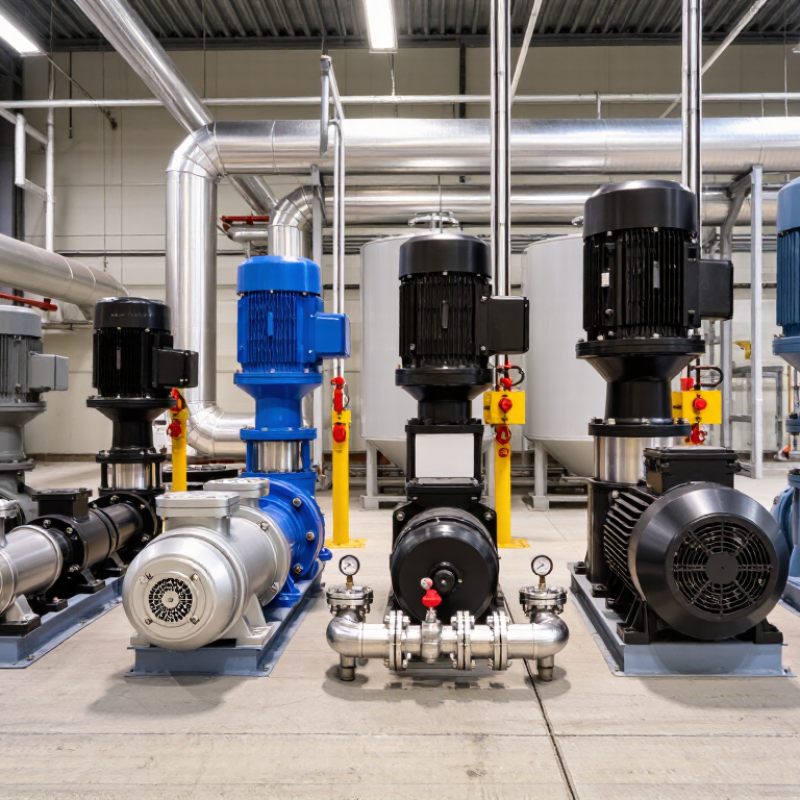
10 Best Feed Pumps for Industrial Use in 2026?

What Industrial Feed Pumps Do and Where They Are Used

Industrial feed pumps move liquid from a storage tank or process vessel into equipment that needs a steady, controlled supply. The word “feed” describes the pump’s role, not one particular pump design. Flow rate, pressure, liquid properties, and operating conditions guide the choice.

They are used in boiler systems, water treatment plants, chemical processing, food production, and many other facilities. A boiler feed pump, for example, delivers treated water against the pressure inside a boiler. In a treatment plant, a feed pump may supply water to filters or membranes. Some processes use metering pumps to add small, measured amounts of an ingredient. Details matter: a thick liquid, abrasive particles, or a temperature change can affect performance and wear.

Not every pump suits every duty. Centrifugal pumps often serve continuous, higher-flow applications, while positive-displacement designs can suit viscous fluids or precise dosing. The installation matters too. Long suction lines, air leaks, and poorly matched piping can cause noise, vibration, or unstable flow. Real systems are rarely as tidy as a diagram. Engineers should check the pump curve, materials, seals, and available suction pressure against actual site conditions. Even careful selection may need adjustment after startup.

Key Criteria for Selecting an Industrial Feed Pump in 2026

Selecting an industrial feed pump in 2026 starts with the duty point, not the catalog headline. Record required flow, discharge pressure, fluid temperature, viscosity, solids loading, and operating hours across normal and upset conditions. A pump sized only for peak flow may operate inefficiently for much of the year. The U.S. Department of Energy’s Improving Pumping System Performance: A Sourcebook for Industry reports that pumping systems can account for 25–50% of energy use in some industrial facilities. Lifecycle efficiency deserves careful review. Compare performance curves using actual fluid properties, then assess energy, seal, and maintenance costs.

Reliability depends on details. Check available net positive suction head against the pump’s requirements, especially with long suction piping or a low feed-tank level. Match wetted materials and seal design to the fluid’s chemistry and temperature; abrasive particles can wear internal clearances. Request documented performance data, test tolerances, spare-part lead times, and access requirements for routine inspection. A strong efficiency figure alone is not enough.

Tips: Plot minimum, normal, and peak flow on the pump curve before choosing controls. Confirm the curve reflects your fluid, not water, when viscosity differs. Keep suction piping short and adequately sized. Small details matter. Site conditions can surprise you, so validate assumptions with measurements before final selection.

Industrial Feed Pump Selection in 2026: Estimated Power vs. Flow Rate

Estimates use water, a constant 100 m head, and 75% pump efficiency. Shaft power is calculated from flow, head, fluid density, and gravity; actual requirements depend on the pump’s performance curve and operating conditions. Before selecting a feed pump, verify required flow and pressure, fluid temperature and properties, materials compatibility, solids content, NPSH, duty cycle, controls, and efficiency.

Common Feed Pump Types and How They Differ

Industrial feed pumps move water, chemicals, oils, or slurry into boilers, reactors, and process lines. The right type depends on flow, pressure, fluid thickness, and solids. A mismatch can cause unstable dosing, excess wear, or poor performance. Small details matter.

Centrifugal pumps suit steady, high-volume flow. Their rotating impeller moves liquid smoothly, much like a fast current through a pipe. They work well with thinner fluids, but viscosity changes can reduce output. Positive-displacement pumps trap and move a set volume with each cycle. Gear pumps handle clean, viscous liquids, while diaphragm pumps isolate the fluid from moving parts. Peristaltic pumps compress a flexible tube, which can simplify handling abrasive or sensitive liquids. Their tubing still wears out. That cost is easy to overlook.

For accurate chemical feeding, metering pumps offer adjustable, measured delivery, though their flow may pulse. Dosing a thick polymer is not the same as feeding warm water. Check the fluid’s temperature, viscosity, solids content, and required pressure against the pump’s operating range. Also consider cleaning access and seal materials. Specifications help, but real fluid behavior can be messy. I would verify performance under actual operating conditions rather than rely on a catalogue figure alone.

Ten Leading Feed Pumps for Industrial Applications in 2026

In 2026, the ten leading feed-pump options are best understood as pump types, not a universal ranking. Centrifugal and multistage pumps handle steady, high-volume transfer. Progressive-cavity and twin-screw designs suit thicker feeds. Diaphragm and piston metering pumps provide controlled dosing, while peristaltic pumps keep fluid within replaceable tubing. Gear pumps work well with consistent oils, and lobe pumps can move shear-sensitive mixtures. Magnetic-drive pumps reduce dependence on shaft seals. Each design has limits.

Tips: Check flow rate, pressure, fluid temperature, viscosity, and solids content before choosing. Compare wetted materials with the actual feed, not just a generic specification. Small details matter. Ask suppliers for performance curves at your operating conditions.

Installation changes results. A pump that performs well on a test bench may struggle with long suction lines, frequent starts, or fluctuating feed levels. Track vibration, seal or tube wear, and motor load after commissioning. Maintenance access deserves attention too; it is easy to overlook until a cleaning cycle takes twice as long. There is no perfect shortlist, and published efficiency figures may not reflect a plant’s real duty cycle.

10 Best Feed Pumps for Industrial Use in 2026? – Ten Leading Feed Pumps for Industrial Applications in 2026

The comparison below covers established industrial pump types commonly used for boiler water, process liquids, chemicals, slurries, and other feed duties. Operating ranges are indicative rather than guaranteed; actual performance depends on pump size, configuration, liquid properties, temperature, and installation.

Rank Pump Type Typical Flow Range Typical Differential Pressure Common Feed Applications Main Advantages Selection Considerations
1 Multistage Centrifugal About 5–1,000 m³/h About 10–250 bar Boiler feedwater, high-pressure process-water transfer, reverse-osmosis feed Suitable for continuous service; multiple stages produce high pressure with a compact footprint. Check suction conditions, water temperature, cavitation margin, and required control range.
2 Vertical Turbine About 20–5,000 m³/h About 2–40 bar Intake water, deep sumps, cooling-water systems, and large-scale water feed Works well with submerged suction and can handle large flow rates. Requires suitable well or sump geometry; installation depth and alignment are important.
3 Horizontal Split-Case Centrifugal About 50–20,000 m³/h About 1–25 bar High-volume clean-water feed, utility systems, and industrial circulation Designed for substantial flow and allows access to internal parts without disconnecting major piping. Needs a properly primed suction line and adequate space for maintenance.
4 Plunger Pump About 0.1–100 m³/h About 10–1,000 bar High-pressure water injection, pressure testing, and specialized process feed Positive-displacement design can deliver high pressure and controlled flow. Pulsation control, pressure relief, seal selection, and liquid cleanliness need attention.
5 Metering Diaphragm Pump About 0.001–10 m³/h About 1–100 bar Chemical dosing, water treatment, additives, and precise low-flow feed Adjustable, repeatable low flow; diaphragm separates the liquid from the drive mechanism. Confirm chemical compatibility, turndown needs, and allowable pulsation.
6 Progressive Cavity Pump About 0.1–500 m³/h About 1–48 bar Viscous feed, sludge, suspensions, and liquids containing soft solids Provides relatively steady flow and handles viscous or solids-bearing liquids. Elastomer compatibility, dry-running protection, and abrasive wear are key factors.
7 Twin-Screw Pump About 1–1,500 m³/h About 1–40 bar Viscous process feed, food and chemical transfer, and some multiphase duties Low-pulsation positive displacement with broad flow and viscosity capability. Requires correct material selection and careful control of solids and operating speed.
8 External Gear Pump About 0.01–100 m³/h About 1–250 bar Lubricating oil, fuel, polymer, and other clean, viscous liquid feed Compact, self-priming in many configurations, and effective with viscous liquids. Not generally suited to abrasive solids; viscosity and relief protection must be considered.
9 Peristaltic Hose Pump About 0.001–100 m³/h About 1–16 bar Slurry, abrasive chemicals, shear-sensitive fluids, and metered feed Liquid contacts only the hose; can handle solids and run in reverse for line clearing. Hose life depends on pressure, speed, temperature, and chemical compatibility.
10 End-Suction Centrifugal About 2–1,500 m³/h About 1–16 bar General process-water feed, transfer, and utility services Widely available in many sizes; straightforward for common, low-viscosity liquid duties. Match the operating point to the pump curve and check suction lift and NPSH requirements.

Note: Flow and pressure figures are broad, representative ranges for pump types, not product specifications or a performance guarantee. Final selection should be based on the required duty point, liquid data, applicable safety standards, and manufacturer-certified curves.

How to Compare, Install, and Maintain Feed Pumps

A feed pump should be compared against the real duty point, not its maximum rated flow. Record required flow, discharge pressure, fluid temperature, viscosity, and solids content. Then check efficiency, materials, seal options, and control range. Metering applications need repeatable dosing; boiler-feed service may place greater emphasis on pressure and temperature limits. The U.S. Department of Energy’s Improving Pumping System Performance sourcebook reports that pumping systems use nearly 20% of global electricity. Efficiency deserves attention. I still see purchase price dominate comparisons, though operating conditions often tell a different story.

Before installation, confirm the pump’s allowable suction conditions and required net positive suction head. Keep suction piping short and adequately sized, support pipes independently, and check alignment after the base is secured. A clogged strainer or a tight elbow near the inlet can undermine performance. Small details matter. Follow the pump manual for priming, rotation checks, and startup; procedures vary by pump design.

Set a baseline during commissioning: flow, pressure, motor current, vibration, and seal condition. Compare future readings with that baseline, not just a generic threshold. The Hydraulic Institute’s pump-system guidance emphasizes assessing the whole system, since throttling and poor operating-point selection can waste energy. Inspect strainers, couplings, seals, and bearings at intervals suited to the fluid and duty cycle. Log what changes. Not always. A small leak may be easy to dismiss, but repeated leakage can signal alignment, wear, or process issues.

FAQS

What does an industrial feed pump do?

It moves liquid from a tank or vessel into equipment needing a steady supply. The word “feed” describes its role, not its design.

Where are industrial feed pumps commonly used?

They serve boiler systems, water treatment plants, chemical processing, and food production. For example, one may supply water to filters or membranes.

How do I choose a suitable pump type?

Match the pump to flow, pressure, viscosity, temperature, and solids content. Centrifugal designs often suit higher flows; positive-displacement pumps can handle thick liquids or precise dosing.

What operating details should I record before selection?

Note normal, minimum, and peak flow, plus pressure, temperature, operating hours, and fluid properties. Peak flow alone can lead to an inefficient choice.

Why should suction conditions be checked?

Long suction lines, air leaks, or low tank levels can cause unstable flow, noise, or vibration. Measure available suction pressure; assumptions can be wrong.

Which pump features affect reliability?

Check wetted materials, seals, performance curves, spare-part lead times, and inspection access. Abrasive particles can wear internal clearances.

What should I monitor after installation?

Track vibration, motor load, and seal or tubing wear. A test-bench result may not match a plant’s real conditions.

Is there one best feed pump for every application?

No. Centrifugal, screw, diaphragm, gear, lobe, and other designs each have limits. Small details matter. Compare curves using the actual fluid, not water by default.

Conclusion

This guide explains how a Feed Pump supports industrial processes by moving liquids reliably and at controlled rates, and outlines the kinds of facilities and applications that depend on it. It presents key selection criteria for 2026, including flow and pressure requirements, fluid properties, materials, efficiency, operating conditions, maintenance needs, and compatibility with the wider system. It also compares common pump types, describing how their operating principles and strengths suit different duties.

The article reviews ten leading feed pump options for industrial applications and offers a practical framework for comparing them against process requirements rather than choosing by specification alone. It also covers essential installation and maintenance considerations, such as correct alignment, suitable piping, routine inspections, and timely servicing. Together, these topics help readers make informed decisions, support dependable operation, and improve the long-term performance of industrial pumping systems.


Ethan

Ethan

Ethan is a seasoned marketing professional with a deep expertise in our company's innovative product line. With a passion for sharing knowledge and insights, he takes the lead in regularly updating our corporate blog, where he explores industry trends, product features, and effective marketing......