Choosing the right Scavenging Pump is not simply a matter of comparing price tags or motor power. The correct choice depends on your process, equipment layout, and operating conditions. A pump handling warm vapors may require different materials than one removing cool air and light moisture. Small details matter.
This guide presents seven practical tips for evaluating pump performance. You will learn how to match flow rate, vacuum level, temperature range, and chemical compatibility with real operating demands. Pay attention to inlet size, hose length, filter resistance, and expected duty cycle. A pump may perform well in a laboratory test but struggle beside a hot machine with a restricted exhaust line.
Experience also teaches caution. Product brochures can look complete, yet some testing conditions remain unclear. Not every specification tells the full story. Ask manufacturers for performance curves, noise data, service intervals, and recommended operating limits. Check whether replacement parts are available locally. That detail is easy to overlook.
Consider maintenance before installation. A transparent moisture trap can reveal contamination early. Accessible filters can reduce service time. Reliable protection features may prevent costly downtime, although they cannot replace proper system design. This article does not promise one universal answer. Your application may expose assumptions that seemed reasonable at first. Use measured data, supplier guidance, and careful field observation to make the final decision.
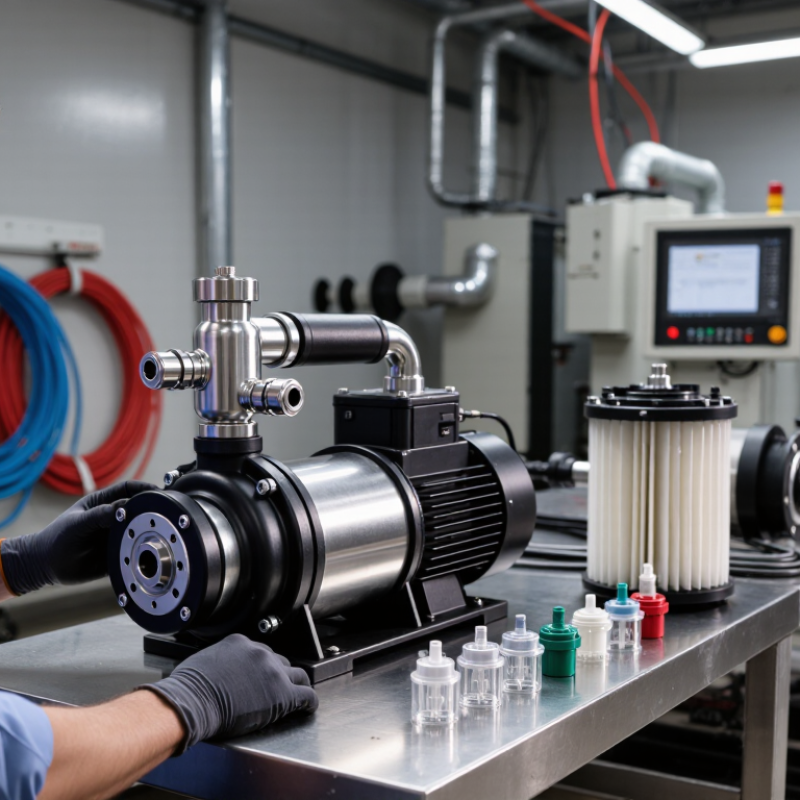
A scavenging pump should not be selected as a generic transfer pump. Its role is to remove unwanted liquid, vapor, or condensate from a process area and keep the main system operating within its design limits. In practice, this may mean protecting a vacuum source, draining a separator, or preventing liquid carryover into sensitive equipment.
The pump’s position matters. A unit installed below a collection vessel may rely on gravity for steady inlet flow, while an elevated installation needs stronger suction control. Review the expected flow rate, fluid temperature, viscosity, solids content, and pressure changes. Small details matter. A thin condensate behaves very differently from a thick chemical solution.
During commissioning, measure actual flow instead of trusting the nameplate. I once saw a pump appear correctly sized, yet its inlet line was too narrow and caused unstable operation. That mistake was expensive. The system also needs protection against dry running, blockage, and sudden liquid surges. Float switches, pressure sensors, and transparent sections can help operators identify problems early.
Material compatibility deserves careful attention. Seals and wetted parts must tolerate the fluid over the full operating temperature range. A pump can handle the flow but still fail because its elastomer softens or hardens. Not every calculation reflects field conditions. Leave room for uncertainty, record operating data, and reassess the pump after real production begins.
Tip 1: Measure the actual flow rate before selecting a scavenging pump. Include process gas, leaks, purge air, and vapor loads.
Tip 2: Match the pump’s capacity to the required pressure range. A pump rated for high flow may perform poorly near its deepest vacuum. Tip 3: Check the operating point, not just the maximum specification. During commissioning, I have seen oversized pumps cycle frequently and waste energy.
Tip 4: Consider temperature carefully. Hot vapors can reduce performance, damage seals, or condense inside the system. Tip 5: Review the gas composition and contamination risk. Dust, moisture, and corrosive vapors may require filtration, separation, or compatible materials. Tip 6: Allow practical margin, but avoid excessive oversizing. A moderate reserve is useful when production changes, although too much capacity can create unstable control. This is easy to underestimate.
Tip 7: Confirm performance under real operating conditions. Test the pump with connected pipework, valves, filters, and the expected vapor load. Manufacturer curves provide valuable guidance, but field conditions often differ. Record inlet pressure, flow, temperature, and power during testing. These measurements make later troubleshooting more reliable. Also check noise, maintenance access, drain points, and restart behavior before approval.
Match Pump Capacity to Flow Rate, Pressure, and Operating Conditions
This representative sizing example applies a 25% capacity margin above the expected flow demand. Select a pump that can maintain the required flow at the system differential pressure while remaining suitable for temperature, fluid properties, contamination level, and continuous-duty operation.
Choosing the right scavenging pump starts with the fluid, not the advertised flow rate. Identify vapor pressure, temperature, viscosity, and possible contaminants. A diaphragm pump suits many chemical vapors and requires no lubricating oil. An oil-sealed rotary vane pump can provide stronger vacuum, but reactive vapors may degrade its oil. A dry scroll pump avoids oil backstreaming, although abrasive particles can damage its seals.
Materials matter just as much. Stainless steel offers strong resistance to moisture and many corrosive vapors. Aluminum keeps the unit lighter, but aggressive chemicals may attack its surface. Seal materials require closer attention. Fluorocarbon elastomers tolerate many solvents, while other elastomers may swell or crack. Check every wetted component, including valves, tubing, and gaskets. Do not trust the housing material alone.
Match capacity to the process. An oversized pump may pull vapors too quickly and overload a trap. An undersized pump may run continuously and overheat. Install a separator when liquid carryover is possible. Review particle size, cleaning chemicals, and expected operating hours before purchase. Compatibility charts help, but they are not absolute. Real mixtures can behave differently. Small trials under actual temperature and concentration often reveal problems that specifications miss. Leave room for mistakes, because maintenance access and seal replacement are easy to underestimate.
7 Tips for Choosing the Right Scavenging Pump
Evaluate Installation Requirements, Maintenance, and Service Access
Tip 1: Measure the installation area before selecting a pump. Record clearance, pipe routing, access doors, and nearby heat sources. A compact unit may still require generous service space.
Tip 2: Confirm the pump matches the system’s flow, pressure, and operating temperature. Review real operating conditions, not only ideal figures. I have seen undersized pumps overwork because peak demand was ignored.
Tip 3: Check connection sizes and mounting points carefully. Small mismatches can create vibration, leaks, or costly field modifications. Measure twice. It is worth the time.
Tip 4: Study maintenance access from the technician’s position. Can filters, seals, valves, and electrical connections be reached safely? A pump hidden behind fixed equipment may become expensive to maintain.
Tip 5: Ask how often routine inspections are required. Look for accessible drain points, clear inspection covers, and replaceable wear parts. Maintenance should not require dismantling half the installation.
Tip 6: Evaluate service support before purchase. Confirm spare-part availability, technical documentation, response times, and technician training. A reliable pump is useful, but dependable support protects uptime.
Tip 7: Consider noise, vibration, and contamination control during installation. Flexible connectors and stable foundations often prevent avoidable problems. However, every site behaves differently, so verify assumptions during commissioning.
Leave room for improvement. Initial plans can miss awkward tools, poor lighting, or limited lifting access. A short service simulation may reveal these issues before the pump is permanently installed.
| No. | Selection Tip | Key Evaluation Dimension | Practical Requirement or Benchmark | What to Verify Before Purchase | Selection Benefit |
|---|---|---|---|---|---|
| 1 | Define the Required Flow and Vacuum Level | Operating flow, inlet pressure, and system resistance | Select the pump from a performance curve at the actual operating point, not only the maximum rated flow. Include pressure losses from ducting, filters, valves, and separators. | Confirm flow is stated in consistent units, such as m³/h or CFM, and verify the curve covers the required inlet pressure range. | Reduces the risk of inadequate capture, unstable operation, or unnecessary oversizing. |
| 2 | Match the Pump to the Extracted Medium | Gas composition, moisture, particles, temperature, and corrosiveness | Check compatibility with wet vapors, condensate, dust, solvent vapors, or corrosive gases. Use upstream filtration, separation, drainage, or cooling where required. | Review wetted materials, allowable inlet temperature, condensate-handling capability, and filter loading limits. | Improves reliability and limits corrosion, contamination, and premature wear. |
| 3 | Evaluate Installation Space and Orientation | Footprint, mounting position, piping layout, and utility connections | Reserve a level, ventilated location with adequate clearance around service panels. Keep inlet pipework short, correctly supported, and free from avoidable sharp bends. | Confirm dimensions, weight, lifting points, inlet and outlet sizes, electrical supply, drainage, and permitted installation orientation. | Prevents installation conflicts, excessive pressure loss, vibration, and difficult commissioning. |
| 4 | Plan for Condensate and Contamination Control | Liquid carryover, particulate loading, drainage, and filtration | Install a suitable knock-out pot, mist eliminator, separator, or inlet filter when the process can generate liquid or solids. Provide a drain point at low sections of the system. | Check separator capacity, filter efficiency, allowable pressure drop, drain access, and whether automatic or manual draining is required. | Protects internal components and helps maintain stable pump performance. |
| 5 | Compare Maintenance Requirements | Routine inspections, consumables, lubrication, and replacement parts | Establish inspection frequency based on duty and contamination. Common checks include filters, seals, lubrication condition, belt tension where applicable, vibration, temperature, and operating sound. | Request a maintenance schedule, consumable list, expected service intervals, shutdown procedure, and spare-parts availability. | Makes total ownership cost and planned downtime easier to control. |
| 6 | Check Service Access and Safety | Access to filters, drains, inspection covers, electrical parts, and lifting points | Provide clear working space for removing covers and replacing service parts. As a planning target, allow approximately 600 mm of working clearance where site conditions permit, subject to local safety rules and the equipment manual. | Verify lockout/tagout provisions, guarding, emergency isolation, service-panel access, and safe lifting arrangements. | Shortens service time and reduces maintenance-related safety risks. |
| 7 | Assess Noise, Energy Use, and Support | Sound level, motor efficiency, controls, monitoring, and technical support | Compare sound pressure data under defined test conditions, motor input power at the duty point, variable-speed control options, alarms, and operating-hour monitoring. | Confirm sound measurement conditions, electrical efficiency data, control compatibility, documentation quality, training, and response arrangements for service needs. | Supports lower operating cost, better workplace comfort, and faster fault diagnosis. |
Note: Clearance, service intervals, materials, temperature limits, and performance values must be confirmed against the selected pump’s technical documentation, site conditions, and applicable safety requirements.
Begin with the energy bill, not the purchase price. Compare motor efficiency, rated flow, vacuum level, and expected duty cycle. A pump running continuously may consume more than a larger unit used intermittently. Ask for performance data under real operating conditions. Laboratory figures can mislead.
Check seven practical points.
Measure airflow demand.
Review motor efficiency.
Confirm control options, such as variable-speed operation.
Inspect overload protection and thermal shutdown.
Look for backflow prevention and pressure relief.
Consider noise at the operator’s position.
Finally, check access to filters, seals, and service panels.
Small details matter. A difficult filter change can increase downtime and encourage unsafe shortcuts.
Total ownership cost includes electricity, replacement parts, labor, training, and lost production. Estimate costs over several years, not one budget cycle. A cheaper pump may need frequent seal changes or create excessive heat. That decision can age badly.
Verify maintenance intervals and spare-part availability in writing. Keep a simple log of energy use, operating hours, faults, and repairs. It exposes patterns that a sales sheet will miss.
Safety deserves direct observation, too. Check guarding, emergency isolation, grounding, and exhaust routing during installation.
I would also question assumptions. A pump that works well in a clean test room may struggle with dust, moisture, or changing loads. Select protection and capacity for the actual workspace, then confirm the choice with a qualified technician and documented risk assessment.
It removes unwanted liquid, vapor, or condensate from process areas. This protects vacuum sources, separators, and sensitive equipment. It is not a generic transfer pump.
A position below the collection vessel can use gravity for steady inlet flow. An elevated pump needs stronger suction control. Check clearance and pipe routing carefully.
Review flow rate, temperature, viscosity, vapor pressure, solids, and pressure changes. Thin condensate behaves differently from a thick chemical solution. Small details matter.
Use suitable float switches, pressure sensors, separators, and visible pipe sections. These devices can reveal blockage or unstable flow early. Protection is not optional.
An oversized pump may overload a trap by pulling vapor too quickly. An undersized pump may run continuously and overheat. Measure actual flow during commissioning.
Check every wetted part, including seals, valves, tubing, gaskets, and internal surfaces. Some elastomers swell or crack as temperatures change. The housing alone is not enough.
Confirm connection sizes, mounting points, service clearance, heat sources, and lifting access. A compact pump may still need generous maintenance space. Measure twice.
Ensure technicians can reach filters, seals, valves, drains, and electrical connections safely. Replaceable wear parts and clear inspection covers simplify service. Fixed equipment can hide problems.
Review spare parts, technical documents, service response, noise, vibration, and contamination control. Perform a short service simulation if possible. Real sites often expose planning gaps.
Nameplate figures may not match field conditions. Record flow, temperature, vibration, and operating hours after startup. Some assumptions will be wrong. That is normal.
Choosing the right Scavenging Pump begins with understanding its role in the overall fluid handling system. Determine whether it will remove wastewater, oil, condensate, or another fluid, and identify the required flow rate, pressure, suction distance, temperature range, and duty cycle. The pump’s capacity should match real operating conditions, including start-up demands and changes in fluid volume. Comparing pump types is also essential, as different designs offer varying efficiency, durability, and handling capabilities. Materials must be compatible with the fluid to reduce corrosion, wear, and contamination risks.
Installation and long-term service requirements should be evaluated before making a final decision. Select a pump that fits the available space and provides convenient access for inspection, cleaning, and replacement of wear components. Safety features, reliable controls, noise levels, and energy consumption can significantly affect daily operation. Finally, consider total ownership cost rather than purchase price alone, including maintenance, replacement parts, downtime, and expected service life. A well-matched Scavenging Pump can improve system reliability, reduce operating expenses, and support safer, more efficient fluid management.

Zhangqiu