In industrial systems, mixing is more than moving liquid from one point to another. Operators need ingredients to reach a consistent blend, even when tanks are large, materials vary, or production schedules are tight. A Mixing Pump can combine circulation and fluid movement in one process, helping reduce stagnant zones and maintain a more uniform mixture. That can matter when handling water-based solutions, process fluids, or other compatible materials.
The right equipment depends on the actual job. Viscosity, solids content, temperature, tank geometry, and required flow all affect performance. A pump that works well in a small vessel may struggle in a deep tank with thick fluid. Details matter. Reviewing operating conditions before selection can help avoid poor circulation, excessive energy use, and unnecessary maintenance. It is also worth checking materials of construction and cleaning requirements, especially when product quality depends on preventing residue between batches.
A practical choice is not always the most powerful one. It is the unit that suits the process and can be operated reliably by the people on site. Ask how the pump will be installed, inspected, and serviced. Consider whether its mixing action reaches the whole vessel, not just the area near the inlet. Those questions sound basic. They are easy to overlook during procurement, and I would not assume that a catalogue rating tells the whole story. This article explores why industrial users choose mixing pumps, what performance factors deserve attention, and how to assess whether one fits a specific application.
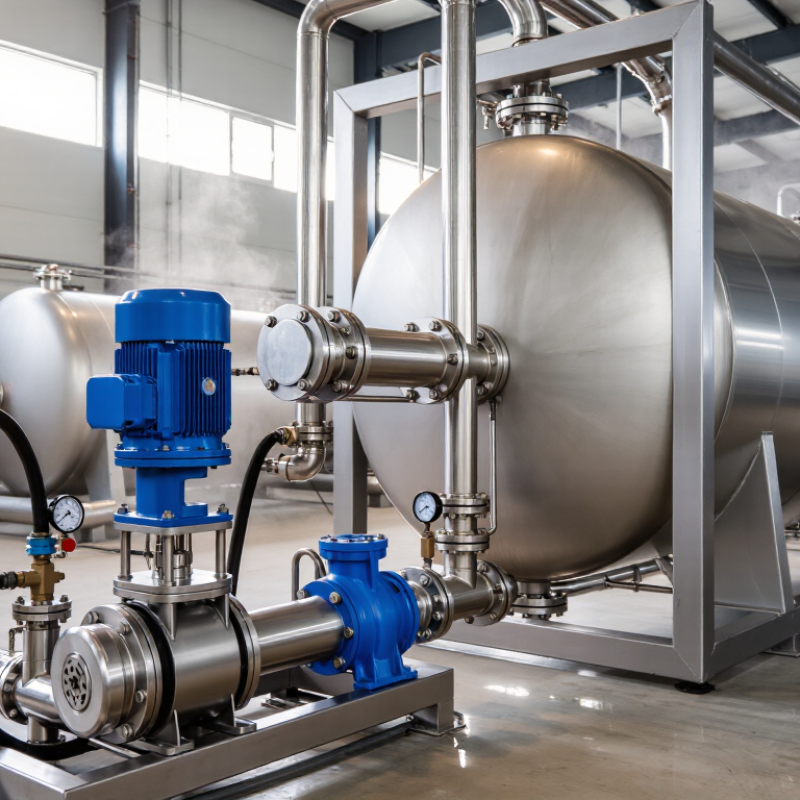
A mixing pump is a mechanical device that moves and blends liquid within an industrial tank or pipeline. It combines fluid transfer with continuous agitation. Inside the housing, an impeller creates pressure and circulation. As fluid passes through the pump, turbulent flow helps distribute solids, chemicals, or temperature evenly. This action reduces stagnant zones near tank walls and the bottom. Some systems draw liquid from the tank, mix it, and return it through a directed inlet. The result is a more uniform batch.
In practice, a mixing pump suits wastewater treatment, food processing, chemical preparation, and mineral slurries. Operators can maintain consistency without installing a separate mixer. Selection depends on viscosity, solids concentration, flow rate, temperature, and tank geometry. For example, a thin liquid needs different impeller action than a thick slurry. Flow rate alone is not enough. Wear resistance also matters when abrasive particles are present. Plant teams should check seal condition, vibration, and motor temperature during operation. Small changes can reveal larger problems. If solids settle after shutdown, the return pipe may be poorly positioned or the pump may lack sufficient circulation. That detail is easy to miss. An imperfect installation can waste energy, even when the pump itself is correctly sized.
A mixing pump is a pump selected or arranged to move liquid while also promoting circulation, blending, or dispersion. It may mix through impeller-driven flow, rotor–stator shear, or a combination of pumping and mixing equipment. The right choice depends on the fluid, process objective, vessel geometry, and required flow and pressure.
| Mixing Pump Type | How It Works | Typical Mixing Action | Common Industrial Uses | Potential Advantages | Key Considerations |
|---|---|---|---|---|---|
| Impeller-driven centrifugal pump | A rotating impeller transfers energy to the liquid. The resulting flow can circulate liquid through a vessel loop or provide mixing when the pump is used with suitable return piping or vessel inlets. | Bulk circulation and blending; mixing intensity depends on flow rate, return location, vessel shape, and liquid properties. | Water treatment, process-water circulation, blending of low-viscosity liquids, and recirculation systems. | Can provide both liquid transfer and circulation in one system; widely applicable to clean, pumpable liquids. | Not every centrifugal pump creates effective tank mixing on its own. Check viscosity, solids, suction conditions, and whether a separate vessel agitator is needed. |
| In-line rotor–stator pump | A fast-moving rotor works close to a stationary stator. Liquid passing through the narrow working gap experiences strong shear and repeated mechanical disruption. | Intensive in-line dispersion and droplet or particle-size reduction, depending on the formulation and operating conditions. | Emulsions, dispersions, product recirculation, and processing of ingredients that benefit from high shear. | Can combine pumping with high-shear processing in a recirculation or continuous line. | High shear can introduce heat and may affect shear-sensitive materials. Performance depends on the head design, clearances, flow, and product properties. |
| High-shear mixing pump | Uses a specialized rotor and stator or similar close-clearance elements to subject the liquid to intense shear as it is pumped. | Rapid incorporation of powders or liquids and fine dispersion; it does not guarantee a particular particle or droplet size without process testing. | Food and beverage processing, chemical production, cosmetics, and pharmaceutical formulations where the process permits high shear. | Useful when a process requires both liquid movement and localized high-shear mixing. | May require careful control of temperature, residence time, and material compatibility. Confirm cleanability and suitability for the required sanitary or containment standards. |
| Side-entry tank recirculation pump | Mounted through the side of a tank, it drives liquid circulation within the vessel. The direction and placement of the flow influence tank turnover and blending. | Large-scale bulk circulation in tanks; effectiveness depends on tank dimensions, fill level, flow direction, and internal obstructions. | Large storage and process tanks, including liquid blending and circulation duties. | Can circulate substantial liquid volumes without installing a top-mounted agitator in some tank layouts. | Tank geometry and inlet orientation are important. Assess vortexing, dead zones, solids settling, and maintenance access for the specific installation. |
| Positive-displacement pump used in a mixing loop | Moves a defined volume of liquid per operating cycle or rotor movement. Mixing is generally created by recirculation through the process loop rather than by the pump alone. | Controlled transfer and recirculation; mixing intensity depends on loop design and any in-line mixing device or return arrangement. | Viscous liquids, metered transfer, and processes requiring relatively steady flow at changing pressures. | Can handle some higher-viscosity liquids more effectively than a centrifugal pump, subject to the pump design and product. | Requires appropriate overpressure protection because discharge flow can continue against a closed or restricted line. Check viscosity limits, shear sensitivity, and solids handling. |
| Recirculation pump with an in-line mixer | The pump moves liquid through a separate in-line mixing element and returns it to the vessel or continues it downstream. | Repeatable blending or dispersion through controlled passes; the mixing element determines much of the mixing action. | Batch blending, ingredient incorporation, and continuous processes requiring an in-line mixing stage. | Allows the pump and mixing element to be selected for their separate duties and can support a defined process layout. | Account for pressure loss through the mixer, required recirculation time, line layout, and the possibility of entraining air or damaging sensitive products. |
| Selection Factor | What to Check | Why It Matters |
|---|---|---|
| Fluid properties | Viscosity, density, temperature, solids content, abrasiveness, corrosiveness, and sensitivity to shear or heat. | These properties affect pump type, materials of construction, power demand, wear, and the quality of the mixed product. |
| Process objective | Determine whether the requirement is bulk blending, tank turnover, powder wetting, emulsification, suspension, or particle-size reduction. | Different mixing tasks need different flow patterns and levels of shear; a pump that transfers liquid efficiently may not provide adequate mixing. |
| Flow and pressure | Specify the required flow rate, system pressure, piping losses, static head, and expected operating range. | The pump must meet the hydraulic duty while allowing for the pressure drop of piping, valves, filters, and any in-line mixer. |
| Vessel and pipe layout | Review vessel dimensions, liquid level, nozzle positions, return direction, pipe length, bends, and internal obstructions. | Layout affects circulation patterns, dead zones, short-circuiting, air entrainment, and overall mixing time. |
| Materials and hygiene | Confirm wetted-material compatibility, seal requirements, drainage, cleaning method, and applicable process or sanitation standards. | Compatibility and cleanability help protect product quality, equipment life, and safe operation. |
| Operation and maintenance | Consider duty cycle, access for inspection, seal and rotor wear, spare parts, noise, energy use, and required safeguards. | Lifecycle cost and reliable operation depend on more than the initial purchase price or nominal capacity. |
Note: “Mixing pump” describes a process role rather than one universal pump design. Actual mixing performance and operating limits must be confirmed against the fluid properties, system design, and equipment specifications.
It circulates and blends liquid in one system. This can keep solids suspended, spread heat, and reduce stagnant areas. Tank corners may still need attention.
Better circulation can help ingredients stay evenly distributed. Operators may need fewer manual adjustments, though results depend on the liquid and tank design.
It may, when sized and controlled for the real process. Measure power across batch stages; oversized equipment or excessive recirculation can waste energy.
Check viscosity, density, tank volume, and required turnover time. Test the actual liquid when possible. Assumptions can miss how solids settle.
Positive displacement pumps can suit thicker materials and provide steady flow under pressure. Confirm solids content and operating conditions before choosing.
They can work well with low- to medium-viscosity liquids and limited suspended solids. Strong circulation is useful, but excessive shear may harm delicate products.
Submersible units can suspend sludge while workers remain outside the tank. Their placement still matters; dead zones may remain near the floor.
Review vibration, seal condition, flow stability, and motor loading. Check impeller clearance regularly, especially when handling abrasive solids. Small changes are easy to overlook.
Assess the pump, controls, pipework, and process duty together. A lower-rated pump may perform better if it matches actual operating needs.
A pump may meet its flow target but still leave poorly mixed areas. Test settling behavior, inspect inlet placement, and review cleaning access. The first choice may need revision.
A Mixing Pump is a specialized piece of industrial equipment that combines fluid movement with controlled agitation. It typically uses an impeller or similar mechanism to circulate liquids, suspend solids, blend different materials, and maintain a consistent mixture throughout a tank or processing system. By integrating pumping and mixing functions, it can simplify equipment layouts and support more stable, efficient operations.
Mixing pumps offer benefits such as improved product uniformity, reduced processing time, better energy management, and lower maintenance requirements compared with separate systems. They are suitable for applications including chemical processing, wastewater treatment, food production, agriculture, mining, and general liquid handling. The appropriate type may vary according to the material’s viscosity, the presence of solids, required flow rate, tank size, temperature, pressure, and corrosion conditions. Choosing the right Mixing Pump requires careful evaluation of operating demands, material characteristics, installation requirements, energy consumption, and long-term reliability.

 Zhangqiu