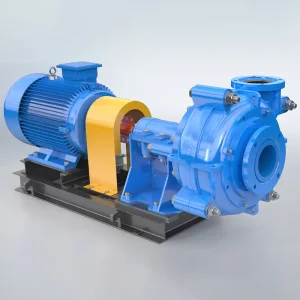
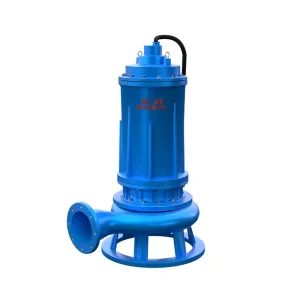
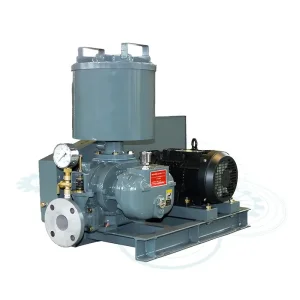
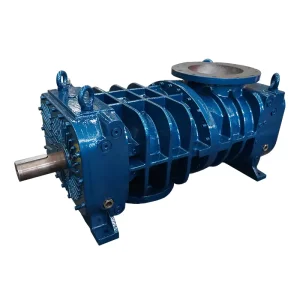
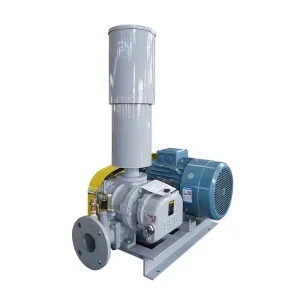
Cheap Underground Mid-Level Drainage Pump Manufacturers & Exporter

Pioneering High-Pressure Mine Water Management & Heavy-Duty Centrifugal Solutions Engineered for Extreme Depth Operations

Safety & Compliance Engineering Notice: All deep-shaft mining and underground mid-level drainage installations must comply with strict national safety standards. Shandong Zhangqiu Blower Co., Ltd. (ZCBC) designs, manufactures, and commissions solutions certified under global guidelines including ISO 9001, ISO 14001, CE, and the national Safety Mark for Mining Products (MA).

Underground Mid-Level Drainage Systems: Technical Architecture, Performance Dynamics & Global Procurement Strategies

In deep underground mining, the handling of mine inflow water is a critical factor in ensuring both operational continuity and personnel safety. An underground mid-level drainage pump acts as a vital staging mechanism. Instead of attempting to lift heavily abrasive, slurry-filled drainage water directly from deep shafts to the surface in a single, high-risk pump operation, mining engineers implement mid-level staging sumps. These sumps temporarily house water at intermediate depths, allowing multi-stage centrifugal pumps to step up hydrostatic pressures efficiently.

Choosing the right manufacturer for these operations involves assessing hydraulic efficiency, abrasion resistance, and explosion-proof integrity. By sourcing from specialized Chinese manufacturers like Shandong Zhangqiu Blower Co., Ltd. (ZCBC), global operators secure high-performance industrial machinery at competitive price-to-performance ratios.

50+
Years of Experience
002598
Shenzhen Stock Code
1.5B
Annual Revenue (Yuan)
430k m²
Industrial Park Area

Why Mid-Level Staging is Crucial in Deep Mines

Deep mining operations (often exceeding 1,000 meters) encounter complex groundwater inflows. Trying to push water to the surface in a single run places massive mechanical strain on pump components, seals, and piping systems, leading to high failure rates. Mid-level sumps act as pressure relief stations:

  • Hydrostatic Head Balancing: By splitting the total dynamic head (TDH) into segments (e.g., 300m - 500m per stage), pumps run within optimized efficiency parameters.
  • Slurry Sedimentation: Mid-level basins allow large suspended particles to settle before final pumping, reducing abrasive wear on primary multi-stage pumps.
  • System Redundancy: Staged pumping creates structural safety barriers; if one stage encounters mechanical issues, the other stages continue operation using reserve sump capacities.

Manufacturing Excellence: The Chinese Factory Advantage

Sourcing mid-level drainage pumps from China provides significant strategic advantages for global buyers. Shandong Zhangqiu Blower Co., Ltd. (ZCBC) is a prime example of Chinese manufacturing integration. Having transitioned from a traditional state enterprise to a modern publicly listed corporation (SZSE: 002598), ZCBC maintains a 430,000 m² industrial park designed specifically for heavy industrial machine production.

The benefits of sourcing from these integrated hubs include:

  • In-house Casting & Metallurgy: Total quality control over raw materials, from high-chrome alloys and duplex stainless steels to specialized ceramic linings.
  • Advanced CNC Machining Centers: Utilization of imported five-axis machining centers from Japan and Germany to guarantee precision tolerances on impeller vanes and multi-stage casing fits.
  • PLM & CAM Integration: Seamless engineering workflows from 3D CAD modeling to Product Lifecycle Management (PLM) and Computer-Aided Manufacturing (CAM), enabling rapid turnaround of customized designs.
  • Cost Efficiency at Scale: Shared industrial infrastructure, optimized local supply chains, and high-volume production allow Chinese manufacturers to export premium equipment at competitive prices.

Localized Applications & Global Industry Trends

Adapting heavy-duty drainage technology to diverse geographic environments and emerging automation frameworks.

Deep Shaft Mining Dewatering

Operating at depths of 800 to 1,500 meters requires explosion-proof motors (such as Ex d I Mb) designed for explosive gas atmospheres. In these applications, ZJQ submerged slurry pumps and multi-stage centrifugal pumps manage high-head drainage, moving sand, silt, and acidic mine water safely through intermediate levels to the surface.

Tunneling & Underground Transport

During subway tunneling or deep utility shaft boring, high groundwater tables often threaten excavations. Mid-level sumps equipped with compact, high-efficiency centrifugal pumps prevent localized flooding. Ceramic wear linings ensure these systems handle abrasive rock dust and concrete runoff without frequent impeller changes.

Smart Pump Stations (IoT & AI)

The global mining industry is moving toward fully autonomous operations. Modern mid-level pump setups incorporate vibration sensors, temperature probes, and smart flow meters linked to SCADA systems. Utilizing predictive diagnostics, operators can address cavitation or seal wear before it causes system failures.

Advanced Metallurgy: Ceramic Linings vs. High-Chrome Alloys

One of the major challenges in underground dewatering is the corrosive and abrasive nature of mine water. Acid Mine Drainage (AMD) often has a pH as low as 2, while containing quartz dust and ore fragments. Standard cast iron pumps can fail in these environments in a matter of weeks.

To address this, ZCBC uses two primary wear-resistance configurations:

  1. High-Chrome Alloys (Cr27+): Excellent for handling coarse slurries and high shock loads. The high chromium content forms chromium carbides that resist micro-cutting wear from sharp minerals.
  2. Sintered Ceramic Linings (TZJK-TD Series): Specialized silicon carbide (SiC) or alumina ceramics offer superior wear resistance. These linings provide near-diamond hardness and are chemically inert to highly acidic or alkaline mine fluids.
Expert Tip on Pump Cavitation: Mid-level sump layouts must maintain a positive Net Positive Suction Head Available (NPSHa) exceeding the Net Positive Suction Head Required (NPSHr) by at least 1.5 meters. Cavitation causes localized micro-jets that can erode even high-chrome impellers, leading to vibration, seal failures, and lost pumping capacity.

Macro Industry Solutions: Integrated Evaporation, Concentration & Treatment

Modern environmental regulations demand comprehensive mine water management. Extracted water cannot simply be discharged into local water tables without treatment. ZCBC addresses these environmental requirements by linking industrial pumps, roots blowers, and evaporation systems:

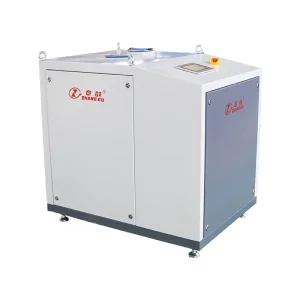
  • MVR (Mechanical Vapor Recompression) Evaporation: ZCBC's MVR systems concentrate highly mineralized mine water, separating clean distillate from solid crystallization products. This process supports Zero Liquid Discharge (ZLD) compliance.
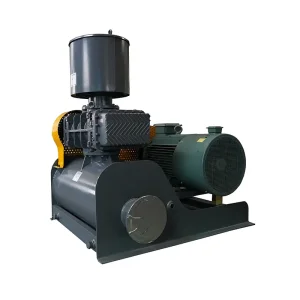
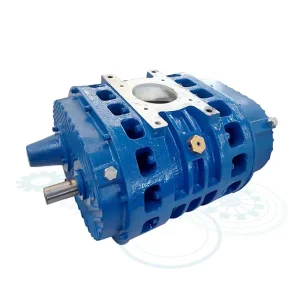
  • Roots Blower Aeration: Our Roots Blowers supply oxygen to underground water treatment ponds, accelerating the oxidation of iron, manganese, and sulfur compounds.
  • Pneumatic Conveying Systems: Direct handling of chemical additives, such as lime, used to neutralize acidic mine water prior to treatment.

Technical FAQ & Troubleshooting Guide

Addressing the common design, operational, and maintenance questions faced by mining and hydraulic engineers.

Q1: How do you determine the correct number of stages for a mid-level drainage pump?
The number of stages is calculated by dividing the Total Dynamic Head (TDH) by the head generated per single impeller stage at the required flow rate. For example, if your mid-level lift is 350 meters and each impeller stage yields 50 meters of head, a 7-stage pump is required. Additional allowances must be made for pipeline friction losses and fluid density variations due to solids concentration.
Q2: What is the primary difference between a ceramic slurry pump and a high-chrome slurry pump?
The difference lies in metallurgy and wear characteristics. Ceramic slurry pumps (typically silicon carbide) feature superior hardness (Mohs scale 9+) and chemical resistance, making them ideal for fine, highly abrasive, and corrosive slurries (pH 1-12). High-chrome pumps are tougher and less brittle, which makes them better suited for handling larger particles (e.g., gravel or coarse ore fragments) that might crack ceramic structures under high impact.
Q3: How does ZCBC guarantee the reliability of its pumps in hazardous, explosive gas environments?
We construct our mining pump assemblies with certified explosion-proof electric motors (Ex d I Mb or Ex d IIB T4). These motors are designed to contain any internal explosion without igniting flammable gas mixtures (like methane) in the surrounding environment. Our entire manufacturing process, including safety certification testing, is certified under the National Coal Mine Safety Mark (MA) and international CE/ATEX standards.
Q4: Can roots blowers and vacuum pumps be integrated into the drainage system?
Yes. Vacuum pumps are often used in automated priming systems for non-submersible centrifugal drainage pumps, ensuring they can prime and start reliably under automatic control. Roots blowers are also used for aeration in settlement ponds and in pneumatic conveying configurations to transport dry chemical neutralizing agents.
Q5: What after-sales support and engineering documents does ZCBC provide to international buyers?
ZCBC provides comprehensive engineering support, including 3D drawings (CAD/SolidWorks) within 24 hours of receiving a request. We offer complete testing certifications (Factory Acceptance Testing - FAT), materials trace reports, and overseas technical support. In addition, our US branch and joint-venture networks provide regional support for parts and maintenance.